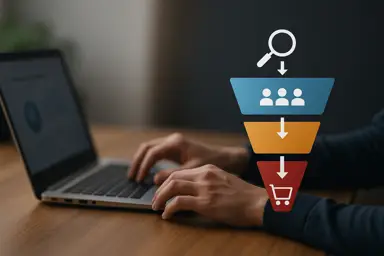
Are you looking for a clear framework to guide you through the conversion process? Let us introduce you to the digital marketing funnel. This framework helps you achieve predictable growth by outlining each stage of your customer’s journey.
At Appsecute, our Brisbane-based team has seen that when marketing follows a structured plan, even the most scattered efforts gain clarity and start producing authentic results.
In this article, we’ll talk about what a digital marketing funnel is and why customer experience visualisation is different from the funnel itself. You’ll also learn how to build a practical conversion strategy that attracts the audience and improves your site’s performance.
Ready? Let’s get going.
What Is a Digital Marketing Funnel?
A digital marketing funnel is a framework that maps out the steps people take from first discovering your brand to becoming paying customers. It’s like a roadmap that guides people from “I’ve never heard of you” to “I want to buy from you.”
Familiarizing yourself with how the system works will be your first step towards building an effective marketing plan.

So let’s break down how these stages work.
Core Stages
Every digital marketing funnel has three main stages: awareness, consideration, and conversion. These stages stay the same regardless of the business you run (except for how you handle each one.)
Customers typically move through the three stages like this:
- Awareness: When someone first hears about your brand, they’re in this stage. At this point, people know they have a problem but haven’t figured out how to solve it.
- Consideration: From here, people start comparing you to everyone else. They’ll read reviews, compare features, and figure out who fits their needs best.
- Conversion: If consumers find that you have what they’re looking for, they’ll likely buy something, start a free trial, or book a call with you. We notice that most businesses stumble right here because they didn’t do enough work in the earlier stages.
If you guide people through each stage with care and clarity, you’ll build trust that keeps them coming back long after that first conversion.
Importance of a Customer Experience Chart
Customer experience charts work differently from funnels. Your funnel shows what you want to materialise, but experience charts demonstrate what truly happens when actual people interact with your brand.
You may consider the experience chart as one person’s specific route through your broader funnel system. The chart captures their unique questions, feelings, and all the places they bump into your brand.
Now, you probably didn’t know this, but converted buyers hardly ever follow a straight line. For instance, someone might see you on Facebook, Google your competitors, read reviews about you, visit your website three times, and then buy from you two weeks later.
Experience charts catch all those zigzag moments that your funnel can’t track. It also helps you understand the why behind people’s choices.
To sum it up, your funnel tells you what stage someone’s in, and the experience chart shows what’s going through their head, what worries them, and which touchpoints push them toward buying.
When you use both tools together, you’ll get the full picture of how visitors behave and how your business performs (it’s about connecting the dots, really).
Pro Tip: Keep updating your funnel and experience chart as your audience changes. What works today might not work next season, so treat them as living tools that grow and adapt with your customers.
How to Build Your Conversion Funnel Strategy?
You need to build a conversion funnel with actionable tactics that guide new prospects from their first contact straight through to their first purchase.
The practical approach focuses on two core areas: attracting the right audience and improving what happens once they land on your site.

It’s time to look at how to build each part of your conversion strategy.
Attract Audiences at the Top of the Funnel
Your main goal here involves attracting a wide but relevant audience. From our experience, both organic and paid tactics work best when they focus on solving problems rather than selling products.
Here are the most effective ways to attract your ideal audience:
- SEO Content: You can write helpful blog posts targeting keywords your audience searches when they first identify problems. Unlike paid ads, organic content builds long-term authority and brings free traffic without immediate sales pressure.
- Social Media Presence: Share valuable content and engage with communities on platforms your audience uses most. That’s because social media creates low-pressure brand discovery compared to traditional advertising.
A helpful brand sticks in people’s minds long after they’ve closed the tab, which is definitely what you want to achieve here.
Improve On-Site Behaviour and Conversion Rates
Once users reach your site, you have two main objectives.
First, analyse customer behaviour to understand their intent and identify where they struggle. Then optimise important elements to improve conversion rates while you use retargeting ads to bring back users who leave.
Focus on these methods to improve your site’s performance:
- Analyse User Engagement: We recommend using heatmaps and session recordings to see precisely how users interact with your pages. Unlike basic analytics that only show numbers without behavioural context, visual data reveals friction points that influence engagement.
- Simplify User Actions: Every extra box you ask people to fill out scares them off a little. In fact, 22% of people say they abandon purchases because there are too many form fields. So, if you want more people to reach out, keep it short and sweet.
- Test Important Elements: Run A/B tests often to see great results. Some reports show that you can increase your conversion rates by up to 30% just by A/B testing key elements.
When your site feels easy and enjoyable to use, people stay longer, trust you more, and often decide to take that next step.
Advanced Funnel Analysis for Important Benefits
Why stop at your first sale? Real business growth happens when you dig deeper into your funnel data and find ways to influence your customers to keep coming back for more.
The advanced approach also helps you profit from the users you already have instead of always chasing new ones.
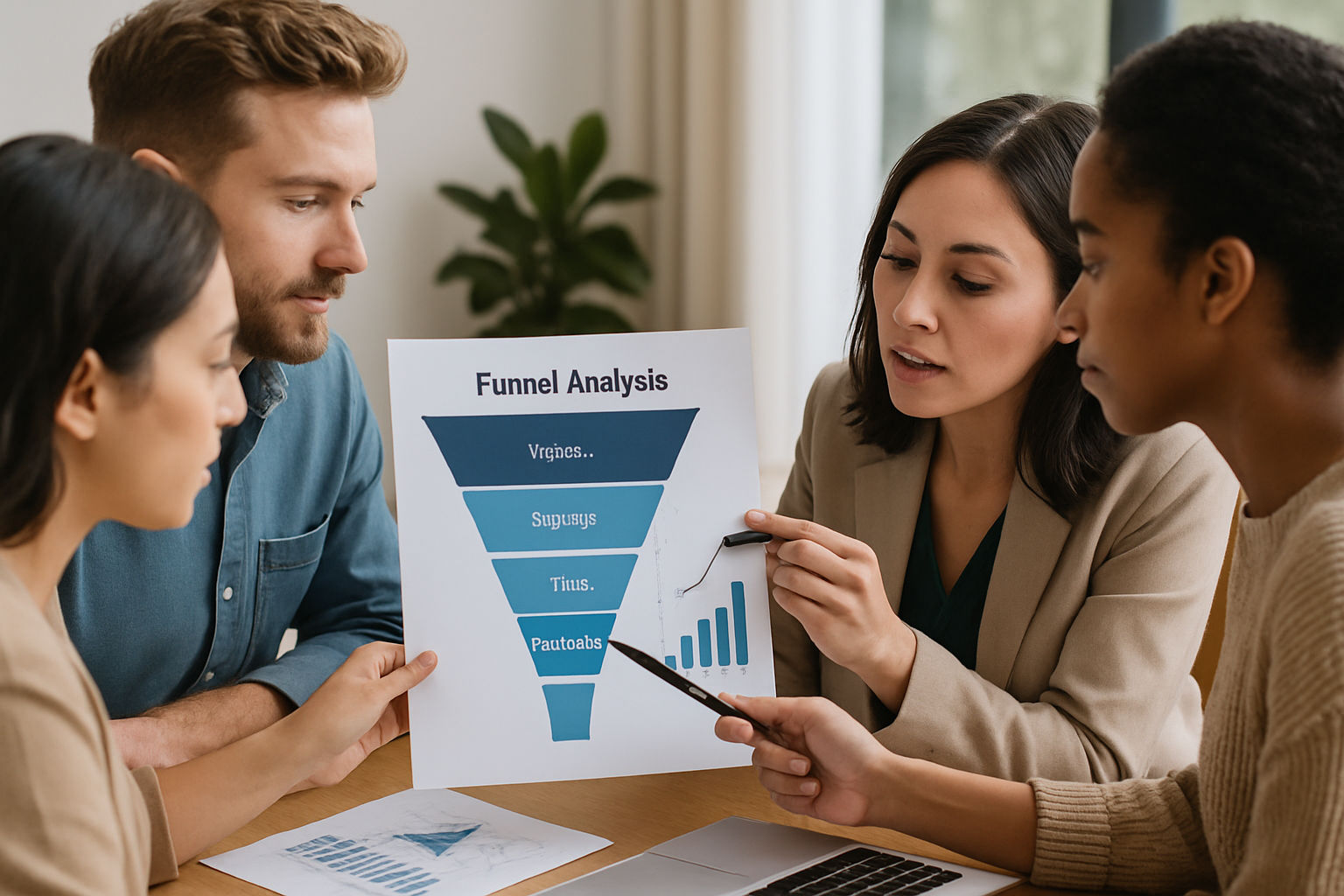
We’ll now explain how to improve your strategy and get more value from every single one of your visitors.
Refine Your Marketing Strategy with Landing Page Data
The landing page can be a testing lab for your entire funnel. That means you can use the page to test and improve your whole approach to getting customers.
So how does it work? Your landing page data shows where your message connects with people and where it fails completely. You can even see which headlines grab attention, which buttons people click most, and which layouts keep visitors longer.
It’s like getting a peek inside your audience’s mind. All that data tells you what people care about, and once you know that, it’s way easier to create campaigns that speak to them directly (you finally “get” them).
Increase Customer Lifetime Value with Funnel Analysis
Customer lifetime value is your biggest prize, and it goes way beyond just a one-time purchase. Successful businesses study what happens after a purchase so they can keep bringing users back. That’s how real growth happens.
Not just that, but real buyer stories can do wonders for winning over new visitors. Map a simple chart around your best customers’ habits to see what keeps them coming back year after year.
This approach helps more visitors stick around and turns them into real fans who can’t help but tell their friends about your business.
Building Your Complete Customer Conversion System
A digital marketing funnel helps you guide people from just finding you to trusting and even buying from you. When a business has clear steps that make that journey easy, it usually wins more customers than the rest.
In this guide, we’ve discussed what a digital marketing funnel is and how to build a practical conversion strategy. Plus, you’ve learned about using advanced analysis for long-term value.
If you’re ready to build your own customer conversion system, get in touch with us today. Our Brisbane-based team combines SEO expertise with conversion optimisation to help you get more value from every visitor.