
New businesses often jump straight to backlink building and site redesigns before figuring out what people actually search for. They focus on technical tweaks because they believe those drive results.
Yes, technical SEO helps, but it’s not where most beginners should start. And if you don’t understand what your audience searches for, all the tweaks in the world won’t bring meaningful traffic.
This article covers the SEO basics most new sites underestimate: keyword research, content that matches search intent, technical foundations, and internal linking. Get these right first, and you’ll see results faster than competitors who skip straight to advanced tactics.
Why Skipping Keyword Research Costs You Traffic
Keyword research shows you exactly what terms your audience types into Google Search, so you create content people actually search for. For example, you might assume customers search for “affordable web design,” but keyword research reveals they actually type “cheap website builder” or “website cost Brisbane.”
Without it, you’re guessing what people type into search engines. You might write detailed blog posts about topics that get zero monthly searches while your competitors target valuable keywords, bringing in hundreds of visitors.
We see this pattern with almost every new business that built their site without doing keyword research first. They’ve got 20 or 30 pages generating almost no organic search traffic.
Meanwhile, competitor sites targeting the right keywords consistently outrank them in search results. Those competitors didn’t get lucky. They just did the research before writing anything.
Content Depth: Why Surface-Level Pages Don’t Rank
A Backlinko analysis of 11.8 million search results found that comprehensive content significantly outperforms shallow pages in search rankings. For new businesses, this is where many SEO efforts fall apart.
Let’s find out why that is.
Google Rewards Content That Covers Topics Thoroughly
Google’s algorithms assess how well your site’s content answers the full scope of a search query. That’s why you’ll often see 1,500 to 2,000-word guides outranking shorter articles. They naturally cover more subtopics and answer related questions.
After working on hundreds of SEO projects, we’ve consistently seen that pages under 800 words struggle to compete for first-page rankings in competitive searches.
The Ranking Cost of Thin Content
When you publish thin web content, users often leave quickly because the page doesn’t answer their question. That behaviour signals to Google that the result wasn’t helpful, which hurts your rankings.
Beyond that, duplicate content across multiple pages confuses search engines about which version to rank. It’s a red flag that you’re not adding much actual content compared to other sites.
Technical SEO Basics Most New Sites Ignore
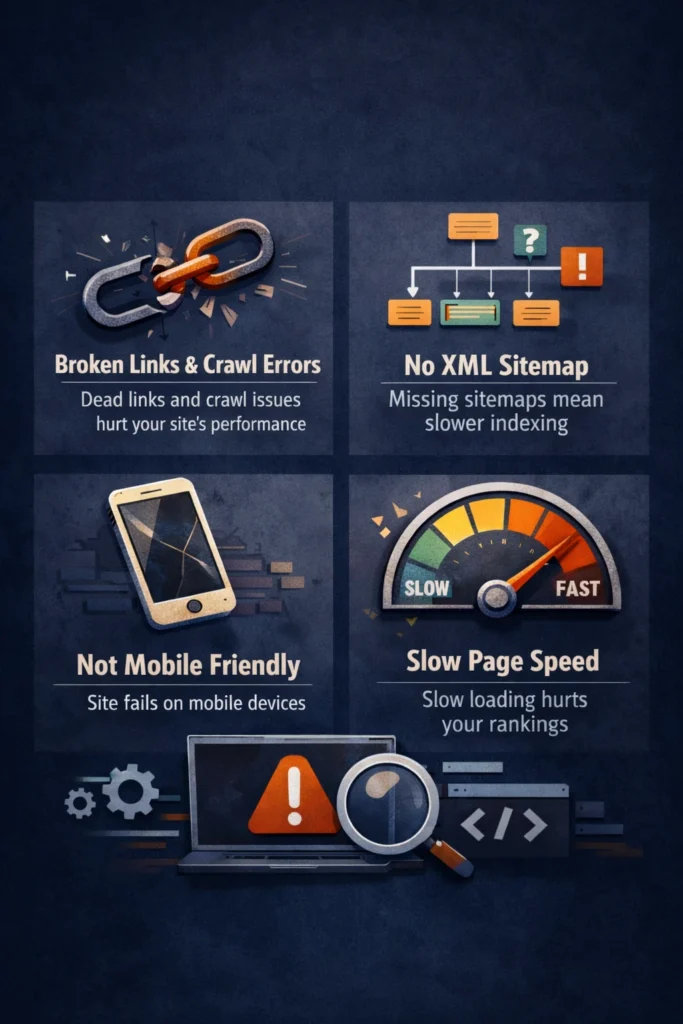
Technical SEO ensures search engines can actually find, crawl, and index your pages properly. But most new sites ignore these basics because they think they’re too complicated or expensive. As a result, their visibility suffers even when the content is solid.
Some of the most commonly overlooked elements include:
- Broken Links and Crawl Errors: When search engines crawl your site and hit dead ends, it wastes their time and makes your site look poorly maintained. Use Google Search Console to spot and fix these quickly.
- Missing XML Sitemaps: An XML sitemap tells search engines which pages exist and how to prioritise crawling them. Without one, new content might take weeks to appear in search results.
- Schema Markup: This structured data helps search engines understand what your web content is about. It’s what powers rich snippets, yet most new sites skip it entirely.
- Mobile Responsiveness: Google uses mobile-first indexing, so if your site breaks on mobile devices, your rankings suffer.
- Core Web Vitals: These measure loading speed, interactivity, and visual stability. Poor scores here often mean lower rankings.
Fix these technical basics first, and you’ll avoid the issues that tank most new sites.
How Internal Linking Boosts Your SEO
Internal links create pathways that help both search engines and visitors discover more of your content. Think of them like hallways connecting different rooms in a building. Without hallways, each room sits isolated and hard to find.
Linking between your pages shows Google which pages are most important and how they relate to each other. For example, if five different blog posts all link to your main services page, that signals this page deserves more attention in search results.
Strategic internal linking also passes link equity from your stronger pages to newer content. If you’ve got a blog post ranking well for a valuable keyword, linking from it to a newer related page helps that new page gain authority faster.
Well-structured internal links keep visitors browsing longer, too. When someone lands on your “SEO basics” guide and clicks through to read about keyword research, that tells Google your site’s content is genuinely helpful.
On-Page SEO Elements New Businesses Miss
Most new businesses focus on the obvious on-page SEO elements like title tags and meta descriptions. But they overlook the technical factors that actually affect how search engines rank their pages.
Two of the most important are:
Core Web Vitals and Page Speed
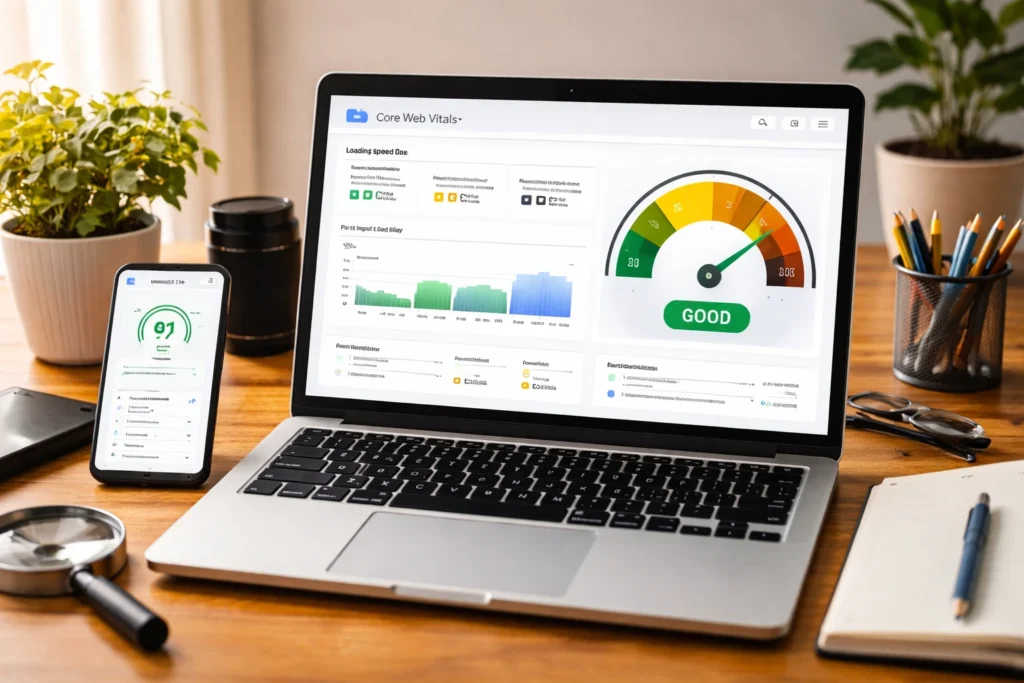
Core Web Vitals measure loading performance, interactivity, and visual stability on your business website. They’re a ranking factor that can influence where you appear in search results.
Page speed plays a big role in these metrics. Google research shows bounce probability increases 32% as page load time goes from 1 to 3 seconds. Three seconds might not sound like much, but people abandon slow sites faster than you’d think.
Thankfully, optimising images and reducing code bloat helps improve these metrics and your organic search visibility.
XML Sitemaps and Crawlability
XML sitemaps tell search engines which pages exist on your site and how to prioritise crawling them. Without a sitemap, new content might take weeks or months for Google to discover and index.
To make sure search engines can actually access everything, proper crawlability is essential. Use Google Search Console to submit your sitemap and monitor which pages Google crawls. This helps you catch issues like blocked pages or admin pages accidentally exposed to search engines.
What People Really Want When They Search
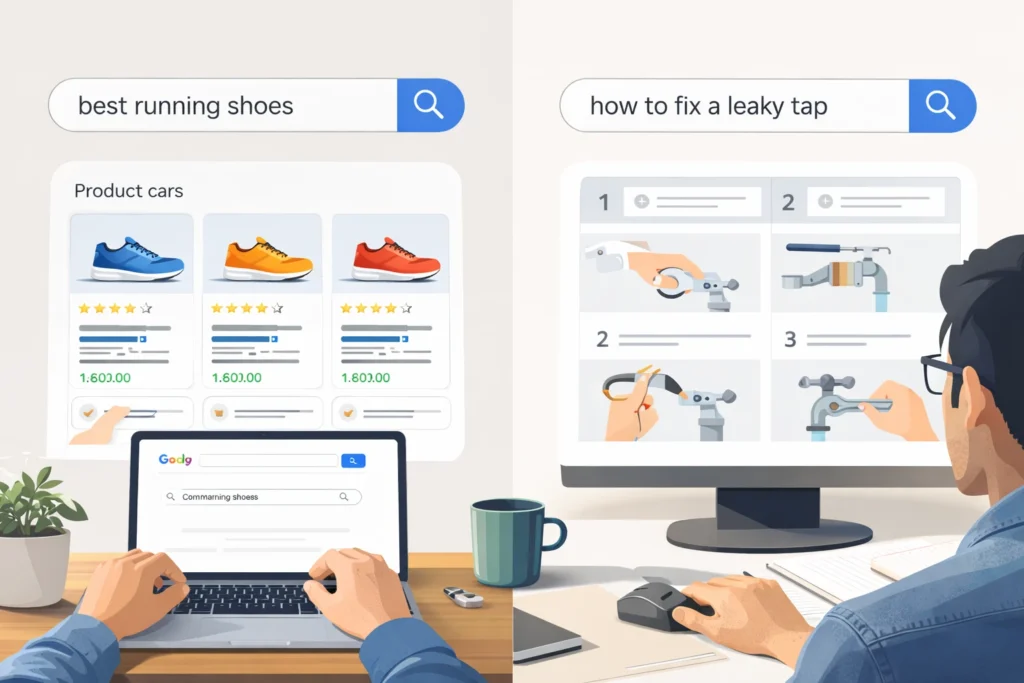
When someone searches “best running shoes,” they’re looking for product recommendations, not a 2,000-word history of running shoes from the 1960s. This difference is known as search intent. It shows whether people want information, specific products, or a local business.
Matching your content to search intent improves both rankings and conversions. For example, someone searching “how to fix a leaky tap” expects a step-by-step guide, not a service page trying to sell plumbing work.
When search intent is ignored, you might rank for keywords that don’t bring relevant traffic. You can appear on page one, but if your content doesn’t meet expectations, users leave quickly. Google picks up on this behaviour and gradually pushes your rankings down.
Prioritise These Overlooked SEO Basics
Start with keyword research to guide all your SEO efforts. Without knowing what people actually search for, everything else becomes guesswork. Keyword research shapes the content you create and the pages you prioritise.
Next, invest time in content depth and technical fixes before chasing backlinks. These SEO basics are entirely within your control and don’t require huge budgets to implement. And they compound over time, building sustainable organic search traffic.
Get them right early, and your rankings improve steadily as your site grows.
Need help implementing these basics? Contact us, and we’ll help you build a proper SEO foundation for long-term growth.