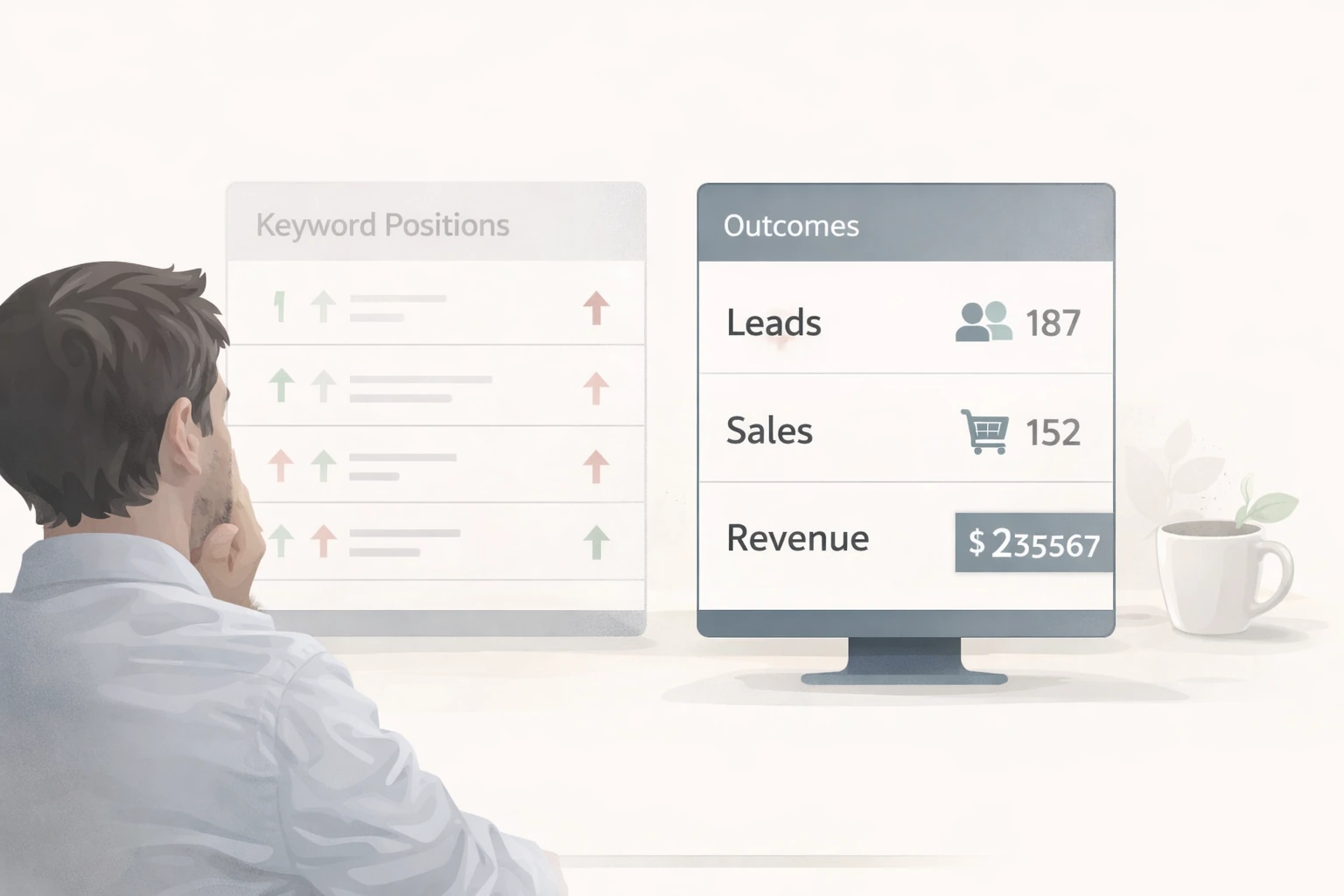
You check your rankings every morning. Your site’s climbing to page one for a handful of keywords, and the graphs in your SEO tools look promising. But when you check your sales dashboard or lead count, nothing’s changed.
If you’ve been there, you already know the problem. Keyword positions don’t pay your bills. Customers do. And measuring SEO success means tracking the stuff that actually connects to revenue, not just where you show up on Google.
This guide shows you how to measure SEO without obsessing over rankings. We’ll cover the metrics that show real business impact, from traffic quality in Google Analytics to engagement patterns that predict conversions.
Let’s jump in.
What Does Measuring SEO Success Actually Mean?
Measuring SEO success means tracking how your search rankings translate into business outcomes like leads, sales, and revenue. A jump from position 12 to position 5 only counts if it brings you actual customers, not extra visitors who bounce right away.
Real SEO success connects directly to your business objectives. If you run an online store, success means tracking revenue from organic search. Similarly, if you’re a local plumber in Brisbane, it means counting how many people call after finding you on Google. The metrics you choose should always connect back to what keeps your business running.
Of course, this only works if your SEO fundamentals are already in place. Once search engines can properly crawl and rank your site, measuring success becomes much clearer. You stop focusing on report-friendly numbers and start tracking outcomes your business can actually use.
Why Rankings Alone Won’t Tell the Full Story

Ever watched your keyword climb to page one only to see zero increase in actual customers? If so, you’re probably nodding along because you’ve been there.
Here’s why focusing only on search rankings leaves you blind to what’s really happening:
- High Rankings Don’t Guarantee the Right Visitors: You might rank first for “affordable web design,” but if everyone clicking through wants free templates, they’re not going to hire you.
- Your Position Changes Constantly: Keyword rankings fluctuate daily due to algorithm updates, competitor changes, or lost backlinks. These shifts often happen without affecting your actual revenue.
- Rankings Show Visibility, Not Value: A top spot means people see your link. It doesn’t tell you if visitors find what they need, engage with your content, or take action once they arrive.
Rankings give you part of the picture, but they don’t show whether your SEO brings in customers who actually convert. That’s why you need to track what happens after people click.
Setting Goals That Work: Align SEO Efforts with Business Outcomes
The biggest advantage of aligning SEO with business goals is that you stop wasting time on metrics that don’t pay the bills. If your goal is to increase sales or generate leads, those outcomes should determine which SEO metrics you track day to day.
The table below shows how this works in practice:
| Business Goal | Primary SEO Metric | What to Track |
| Increase Online Sales | Revenue from Organic Search | Total sales value from unpaid search results |
| Generate Leads | Organic Lead Conversions | Form submissions from search traffic |
| Improve Local Footfall | Google Business Profile Actions | Direction requests and phone calls |
| Build Brand Awareness | Branded Search Volume | People searching your business name directly |
Just think about it. A local café in South Bank measures success differently from an e-commerce store because their revenue sources are completely different. Connecting specific metrics to business objectives shows exactly how SEO contributes to your bottom line.
Track Business Impact with Google Analytics
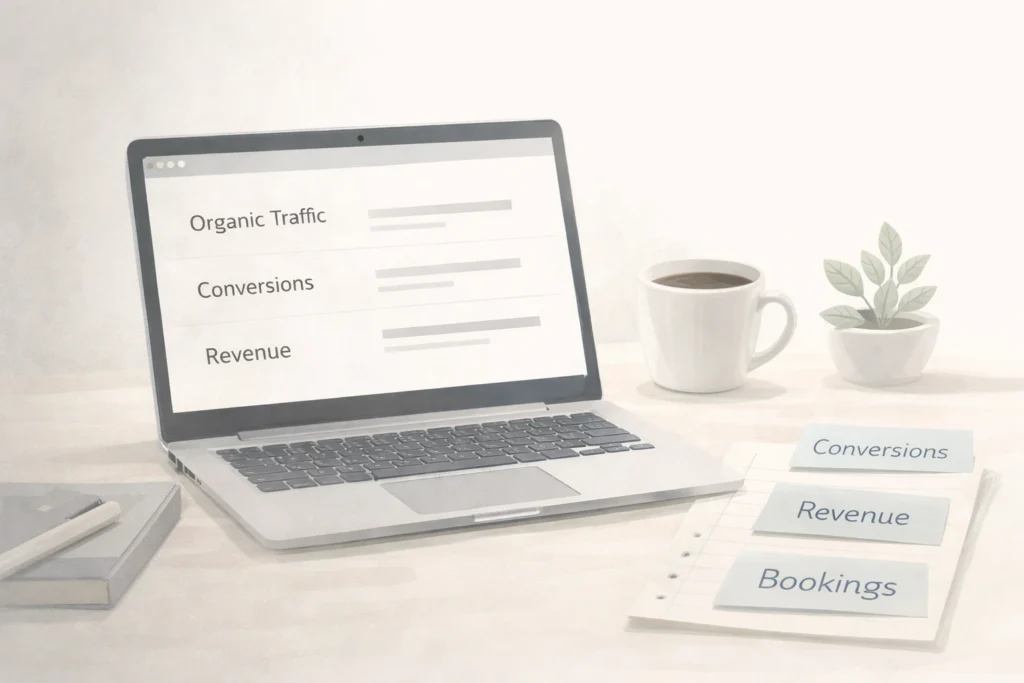
Google Analytics is the scoreboard of your SEO campaign. It shows which keywords bring visitors, which pages they land on, and whether those visitors convert into customers. GA4 (the current version) gives detailed insights into organic search performance.
The two areas that reveal the most about SEO impact are organic traffic quality and e-commerce revenue tracking.
Organic Traffic Quality Over Quantity
Want to know which search terms actually bring buyers? Open GA4 and go to Reports > Acquisition > Traffic Acquisition, then filter by organic search. You’ll see which queries drive conversions and which just bring browsers.
Usually, the more specific searches bring customers. For example, we’ve seen Brisbane retailers rank for “best running shoes” but generate more sales from “Brooks Ghost 15 women’s size 8.” That’s because those visitors already know what they want and are ready to purchase.
E-commerce Transactions and Revenue Tracking
If you run an e-commerce store, GA4 lets you connect organic search traffic directly to sales revenue. To do this, head to Reports > Monetization > Ecommerce Purchases to see which products benefit most from your SEO efforts.
These product performance reports reveal how much revenue each landing page generates and which search terms drive the most purchases. Tracking revenue this way also shows whether your SEO investment is paying off and highlights where to focus optimisation next.
User Engagement Metrics You Can’t Ignore

A page can rank first on Google and still fail if visitors leave within seconds. The reason? Your rankings don’t tell you what happens after someone clicks.
Engagement metrics show how visitors interact with your pages once they arrive from search results. These behavioural signals reveal whether your content layout, structure, and readability keep people on-site.
The key engagement signals fall into two groups: bounce rate and dwell time, and pages per session and click-through behaviour. Let’s look at each in more detail.
Bounce Rate and Dwell Time
Both bounce rate and dwell time reveal whether your content matches what visitors expected. Bounce rate tracks the percentage of single-page visits where people return to Google without clicking anything. Dwell time, on the other hand, measures how long visitors spend on your page before leaving.
When bounce rates stay high and dwell times stay low, Google notices. It signals that your page didn’t satisfy the search intent, which can hurt your rankings over time.
Pages Per Session and Click-Through Behaviour
Pages per session counts how many different URLs visitors explore during a single visit to your site. When that number goes up, it usually means your internal links are working, and people want to learn more.
Click patterns also reveal which topics generate the most interest. If visitors consistently click through to your service pages or pricing information, that signals strong purchase intent and helps you identify which content drives conversions.
Beyond Traffic: Content Marketing ROI and Link Building Results
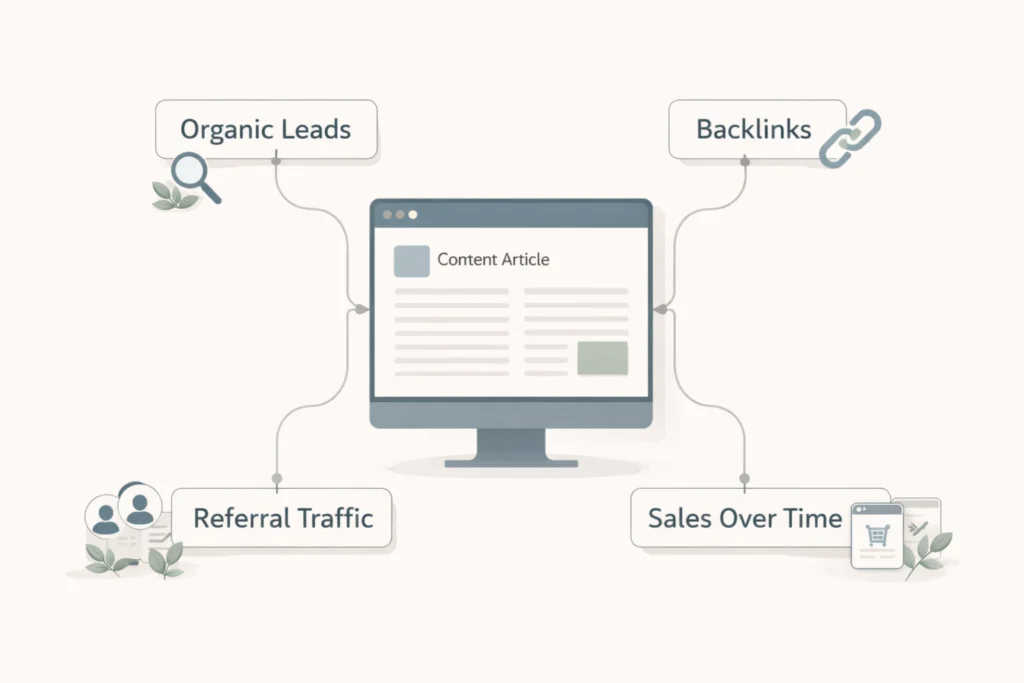
Content marketing and link building keep working long after you hit publish. A blog post you wrote six months ago continues ranking for new keywords, attracting backlinks, and driving conversions without any additional effort from you (that’s the compounding effect everyone talks about).
What makes this valuable is how one piece of content can multiply its impact. A comprehensive guide on, say, email deliverability can rank for 30 related searches like “email bounce rate,” “SPF records explained,” and “email authentication setup.” Each ranking brings new visitors who convert at rates you can track in your analytics dashboard.
Backlinks work similarly. When an industry site links to your content, you don’t just get referral traffic from that one link. It often helps lift rankings across your entire site, not just the linked page. That’s why a solid SEO content strategy pays off. Quality content naturally attracts these valuable links over time, which also helps diversify your traffic sources.
And the benefits extend beyond search engines. Link building brings visitors from referral sites, industry publications, and partner mentions. To see if it’s working, check your acquisition reports to see if referral traffic is climbing alongside organic search traffic. When both grow together, your link-building strategy is working.
Start Tracking What Grows Your Business
Measuring SEO success doesn’t require tracking every possible metric. Start with the ones that connect directly to revenue: conversions from organic search, engagement rates on your top landing pages, and revenue generated from SEO traffic.
Pick one metric from each category we’ve covered and track it consistently for the next month. Use Google Analytics to monitor traffic and conversions.
If you’d rather focus on running your business, we can handle the SEO measurement for you. Contact us today and let’s discuss how we can help grow your organic traffic and conversions.