
Every Australian business wants the same thing from Google: visibility that turns into enquiries. SEO vs Google Ads is usually the first decision they face. SEO promises long-term reach, while paid ads promise instant traffic. On the surface, both look like simple ways to get in front of customers who are already searching.
The problem is treating SEO and Google Ads like interchangeable shortcuts. Many businesses choose one based on what sounds better or feels safer, without factoring in timeline pressure, budget limits, or how competitive their market is right now.
This guide breaks down when SEO makes sense, when paid ads are the better move, and whether using both actually saves money. If you’re trying to decide where to invest next, this will help you choose with clarity.
SEO vs Google Ads: What’s Actually Different?
SEO and Google Ads both put your business in front of people actively searching on Google. The difference is how quickly results appear and how long they last.
Search engine optimisation focuses on earning traffic from organic search results. You improve your site, create relevant content, and build authority over time. It takes months to start ranking. But once you do, traffic can continue without paying for each click.
Google Ads, by contrast, prioritises speed. It places your business at the top of the page through paid listings. You bid on keywords, and when someone searches those terms, your ad appears. Every click costs money, whether that visitor converts or leaves. The moment you pause a campaign or exhaust your budget, your ads disappear from search results.
Think of it this way. SEO builds value over time, like owning property. Paid ads are closer to renting space that vanishes when you stop paying.
How Google Ads Work (And What You’ll Pay)
Google Ads works by letting you bid on keywords. When people search those terms, your business appears at the top of the search results. Here’s what that process actually looks like in practice, and what it costs.
You Bid on Keywords in Google Search
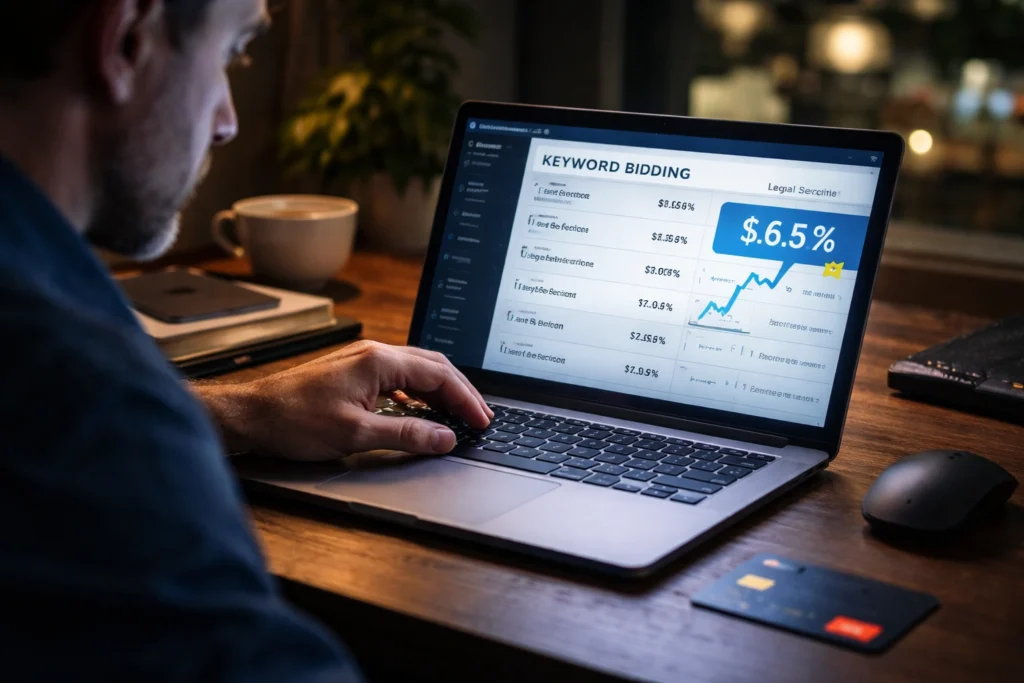
The process starts with choosing relevant keywords for your business. If you are a Brisbane lawyer, you might bid on “family law advice” or “divorce lawyer near me.” When someone searches those terms, Google shows your ad if your bid and relevance outperform competitors.
That visibility comes at a price, and it’s not the same for every business. For example, legal services often average around $6.75 per click, while e-commerce sits closer to $1.16. Those costs add up quickly, which is where the real trade-off appears.
Clicks Cost Money, Ads Don’t Last
Unlike SEO, where you earn and hold rankings, paid ads only work while you keep paying Google. Every click drains your budget, whether it leads to a sale or an enquiry. The moment you pause a campaign or run out of budget, your ads disappear from search results. No grace period. No residual traffic. You’re renting visibility at the top, not earning it through content and authority.
Perfect for Testing Before You Commit
One major advantage of paid ads is speed. You get immediate feedback on what actually works. That makes it easy to test landing pages, messaging, and offers in days rather than months, then use those insights to improve everything else.
If you want cheaper ways to experiment, platforms like Microsoft Ads and Meta Ads can help. They often have less competition and lower click costs, which makes testing more affordable without the same budget pressure.
How SEO Builds Organic Traffic Over Time
SEO builds organic traffic by improving how search engines find, understand, and rank your site. It takes longer to show results, but once you start ranking, traffic can continue without paying for every click. To make that happen, three things need to align: what people search for, how your pages are built, and how your content connects across the site.
Keyword Research Shows What People Search
Keyword research shows you what people actually type into Google when they’re looking for businesses like yours. It reveals which terms potential customers use most often and how hard those terms are to compete for.
That insight helps you focus on pages that can realistically bring traffic, instead of guessing what might work. To get started, you’ll need a keyword tool like Google Keyword Planner to see search volume and competition levels. Once you have that data, you can choose keywords that balance demand and competition, rather than chasing terms you’re unlikely to rank for.
On-Page SEO Gets You in Google’s Search Results

On-page SEO tells Google what each page is about through title tags, meta descriptions, headers, and content structure. Get these elements right, and your pages can rank for relevant searches. Miss them, and even good content can stay invisible.
Internal Links and Content Keep You Ranking
Want Google to find your new content faster? Internal links do that by connecting related pages and showing search engines which content carries the most importance. When you publish new or updated content, those links help distribute authority from established pages to newer ones.
That approach only works if you’re creating content worth linking to. Fresh content signals that your site remains up to date, which encourages search engines to rank it above outdated competitors. Over time, consistently publishing quality content expands your internal linking options and increases the range of search terms your site can rank for.
When Paid Ads Are Your Best Bet
Waiting for SEO to build momentum doesn’t work for everyone. Sometimes you need customers next week, not six months from now. That’s when paid ads become the better move. In our experience, paid ads work best in these four situations:
- New Businesses: As a new business, you’re already burning through cash on rent, salaries, and overheads. Waiting for SEO to produce results means months without income. But paid ads start bringing enquiries the day you launch, so you can cover costs while building organic presence in the background.
- Seasonal Peaks: Tax accountants need clients in July, not November. Similarly, Christmas retailers can’t spend October on SEO and expect December sales. When your year depends on just a few months, paid campaigns capture demand the second your season opens. SEO doesn’t work on your timeline.
- Competitive Industries: If you’re a Brisbane lawyer or financial advisor, breaking through established competitors organically can take years. With paid ads, you gain visibility almost immediately while building rankings in the background at your own pace.
- Product Testing: Launching a new service, but unsure if people will buy? Paid campaigns show what works (pricing, messaging, objections) in weeks instead of months. Use that feedback to refine before investing heavily in SEO.
Paid ads aren’t always the answer, but when speed is more important than cost efficiency, they’re the fastest path to proving your business model works.
When SEO Makes More Sense

SEO makes sense for most businesses at some point. It’s just a question of when to prioritise it. If you want long-term traffic without paying for every click or you’re working with a tight budget, SEO makes the most sense. You pay upfront for content and optimisation, then that traffic keeps flowing without draining your budget monthly.
A few things to consider, though. You’ll need content that positions your business as an expert, as well as the technical SEO work to help pages rank. That way, Google can find your site, and customers see you as a credible option when they’re researching before they buy.
Competition also plays a role. If you’re targeting local suburbs or niche services with low competition, you can rank faster. That makes SEO a better investment than constantly paying for clicks when organic rankings are within reach.
Bottom line: Even if you have the budget for ads, SEO delivers better value long-term and brings organic traffic that compounds over time. Paid ads stop the moment you pause, but SEO keeps working.
Can You Combine Both to Drive Growth?
Yes, and most fast-growing businesses we know use both paid ads and SEO together instead of picking one. It’s because running paid ads for high-value keywords while building SEO for everything else gives you visibility across search results. More work upfront, but the compound effect makes it worthwhile.
Think about it like this: paid ads give you immediate data on what actually converts. Then you invest SEO into those proven winners. Now you own both the paid spots at the top and the organic rankings below (talk about dominating search results).
The best part? You’re not guessing which strategy works. You’re using data from one to strengthen the other.
Mistakes That Waste Your Digital Marketing Budget

After fixing dozens of failed campaigns, the same mistakes keep showing up. Here’s what drains budgets without delivering results:
- Choosing Based on Price Instead of Timeline: Businesses pick SEO because it “sounds cheaper” without realising they need customers next month, not next year. Then they panic three months in when revenue hasn’t moved (and by then they’ve burned through their budget anyway).
- Running Ads to Pages That Don’t Convert: We’ve seen companies spend $10,000 on Google Ads sending traffic to landing pages with no clear offer, slow load times, or forms that don’t work on mobile. The ads perform fine, but the page ruins the sale.
- Investing in SEO Without Content: You can’t rank without content that answers what people actually search for. Hiring an SEO consultant won’t help if you haven’t published anything worth ranking. It’s like hiring a personal trainer but never showing up to the gym.
- Ignoring the Data Connection: The biggest miss? Running paid ads and SEO as separate strategies instead of using conversion data from ads to guide which keywords you optimise for organically. You’re basically guessing instead of following a roadmap that your customers already gave you.
The pattern here? Every mistake comes from treating digital marketing like a checkbox instead of a system where each piece informs the next.
Start With What You Can Afford
The good news is you don’t need a massive budget to start seeing results from either approach. If you need customers this month, start with a small paid ads budget and learn what works. Test your messaging, find out what converts, then scale from there.
If you can wait, invest in SEO and build content consistently. Focus on keywords you can realistically rank for instead of going head-to-head with established sites right away.
Not sure which approach fits your business? At Appsecute, we help Australian businesses figure out the right mix of SEO and paid ads based on their timeline and budget. Contact us today, and we’ll walk you through what makes sense for your situation.