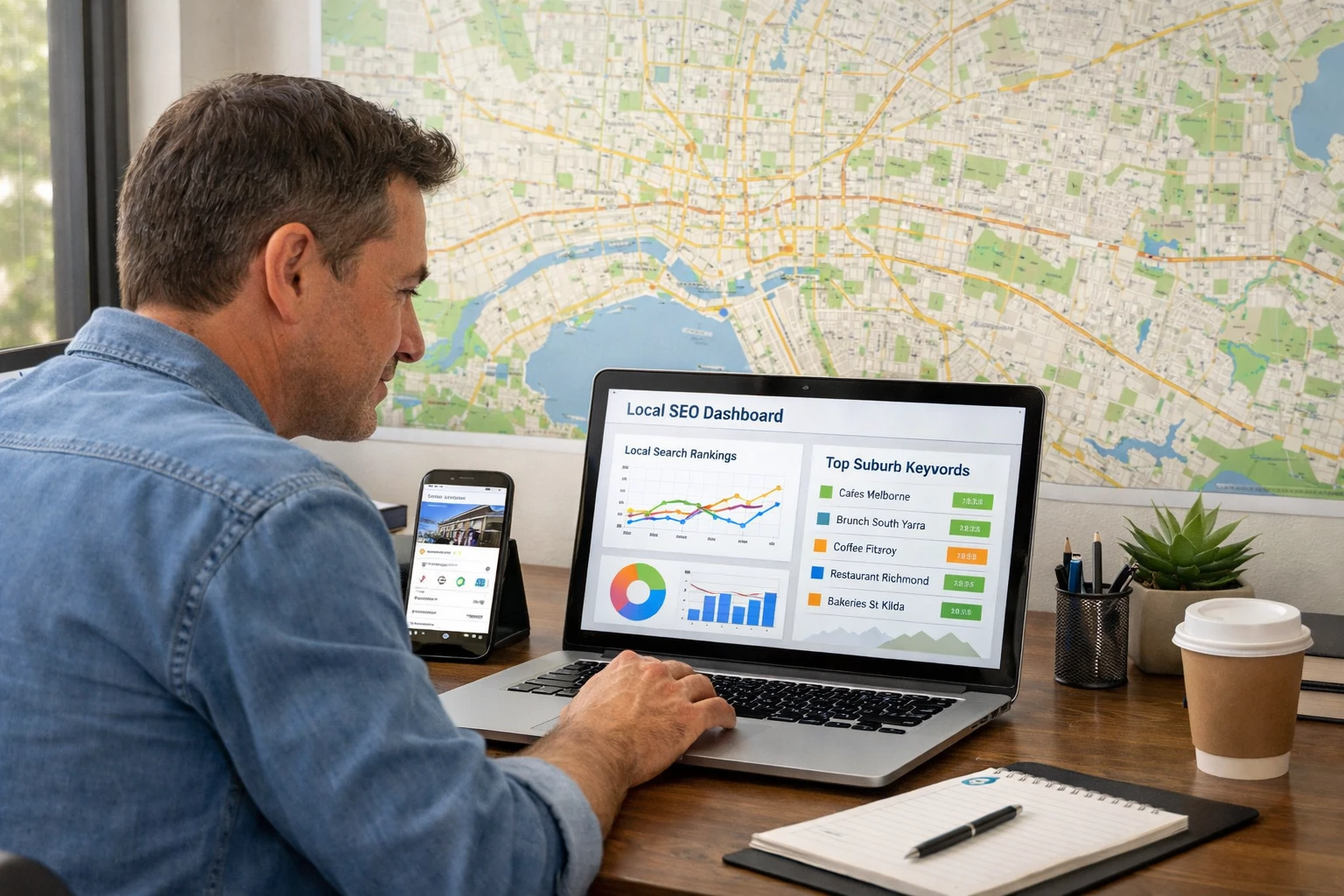
Most local SEO campaigns fail because they focus on activity instead of outcomes. Businesses chase rankings, update listings, and send reports before anyone stops to ask what success actually looks like. Without that clarity, visibility becomes the default goal.
But visibility alone doesn’t create demand. Just because you’re showing up in local search doesn’t mean the right customers are finding you. It only works when it connects to real buying intent in your specific area.
That disconnect is where most campaigns stall. This article breaks down where things go wrong and what you can fix right now to build a campaign that brings in customers. Let’s start by clarifying what local SEO should mean for your business.
Local SEO in Australia: What It Means for Your Business
Local SEO is how you get your business to show up when people in your area search for what you offer. The numbers back this up. 93% of Aussie consumers search online for hyperlocal businesses.
And that’s not even the best part. Local searches convert 80% of the time. So when someone searches for a cafe in Fortitude Valley or a plumber in South Bank, they’re likely to visit or call within hours.
For local SEO in Australia, that means optimising for location-based searches like Google Maps and local search results. The goal here is to target people searching in specific suburbs or cities where buying intent is strongest.
The Setup Mistakes That Sabotage Local Rankings
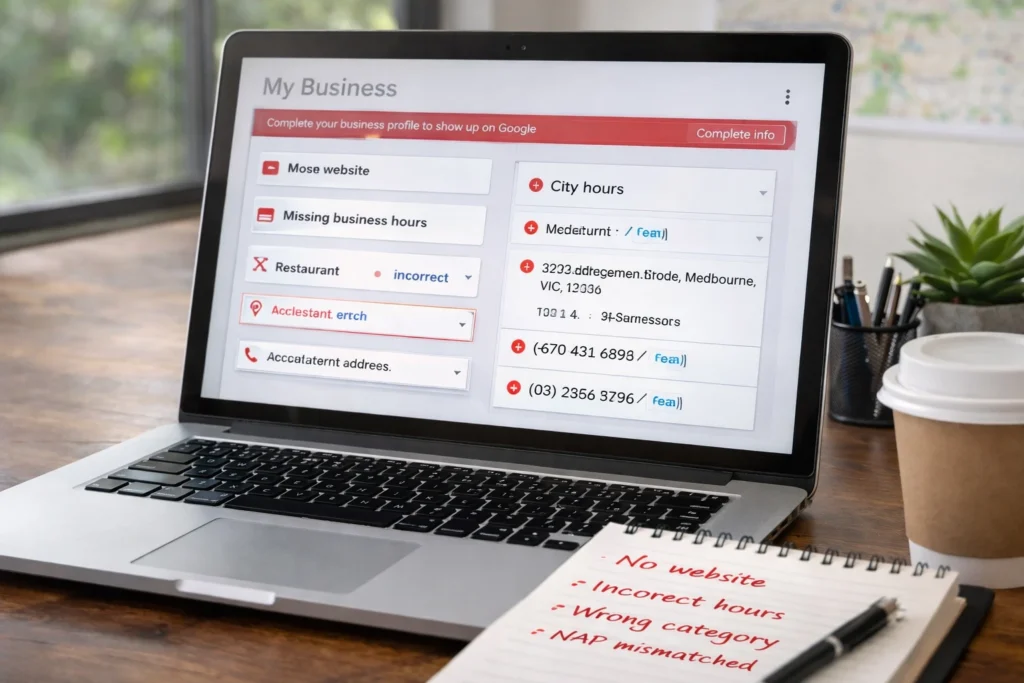
Picture this: You’ve spent hours filling out your Google Business Profile, but three months later, you’re still invisible in local searches. This happens because initial setup errors create problems that snowball and stop your business from showing up in rankings. Here’s where most campaigns go wrong during setup.
Skipping Google Business Profile Basics
An incomplete business profile means Google can’t gather what it needs to rank you. For instance, empty category fields leave it guessing what your business does and who should see it. Similarly, unclaimed profiles often have very limited visibility in local search results or Google Maps.
On the flipside, filling these out properly gives you an edge over 55% of Australian businesses that still haven’t claimed their Google Business Profile. If you’re willing to handle the basics, that’s a massive opening while competitors sit on the sidelines.
Inconsistent Business Details Across Platforms
Different phone numbers, addresses, or business names across directories make it hard for Google to know which profile is legitimate. The result? Your listings end up fragmented, each competing against the others instead of building authority. Even worse, this mismatch weakens the trust signals Google looks for before ranking you in local search.
Ignoring Mobile Search Behaviour
A Reviewtrackers report found that 57% of local business searches happen on mobile or tablet. Google also uses mobile-first indexing. What does that mean for your business? If your mobile page speed is slow, searchers may leave before they even see your business information.
Anything that makes it harder for users to take action is a problem. For example, if your site has no click-to-call buttons, mobile searchers have to type your number manually, and most just won’t bother. They’ll tap the next result instead, which is usually a competitor who made it easier to get in touch.
Why Your Local Search Results Don’t Match Your Effort
Have you ever wondered why your local SEO work isn’t paying off? You’ve done the updates, but nothing seems to move. The reason is that Google weighs proximity, relevance, and prominence together, not just how much work you put into one area.
Think about your biggest competitors. If they’re bringing in more customers, they probably have better review signals and more consistent citations across directories. When a business has 50 recent reviews, and yours has 10, Google sees that as a stronger trust signal, regardless of how complete your profile is.
Your SEO strategies might also chase keywords that sound good but lack actual local intent. Ranking for “best cafe” means nothing if people in your area search for “breakfast Fortitude Valley” instead. The search intent is more important here than search rankings for generic terms.
Money Drains: Where Australian Businesses Lose on Local SEO

Small businesses often waste $2,000-$5,000 yearly on local SEO tactics that don’t actually improve their rankings. If any of this feels familiar, you’re spending money in the wrong places, and most of the time, it’s these areas:
- Paid Directories That Don’t Deliver: Not all directories help your local search rankings. Google tends to favour major platforms like TrueLocal and Google Business Profile, but many smaller paid directories won’t move the needle.
- Agencies Without Local Expertise: Generic strategies like national keyword targeting don’t work for location-specific searches. We see businesses drop thousands on services that ignore suburb-level targeting like “Fortitude Valley plumber” instead of just “Brisbane plumber.”
- Google Ads To Cover Poor Rankings: Ads become a band-aid when the real issue sits in your Google Business Profile setup. The cost keeps climbing because you’re treating symptoms instead of fixing the foundation.
- Website Redesigns Before Profile Fixes: A beautiful new website won’t help if your business profile has the wrong category, missing business hours, or no street address listed.
The pattern here is simple. Money goes towards fixes that look productive but don’t address the setup problems underneath.
Free Tools to Diagnose Local Search Problems
Diagnostic tools for local SEO are like a mechanic’s scanner: they tell you exactly what’s wrong before you waste money guessing. The best part? You don’t need expensive software to spot these problems. Several free tools can catch gaps even paid platforms often miss, and we’ll look at the best three.
Google Business Profile Manager
Google Business Profile Manager shows which profile sections are incomplete and how they limit your local visibility. It reveals how customers find your business through search and Google Maps, while tracking review response times and customer questions that influence your local rankings.
Google Search Console
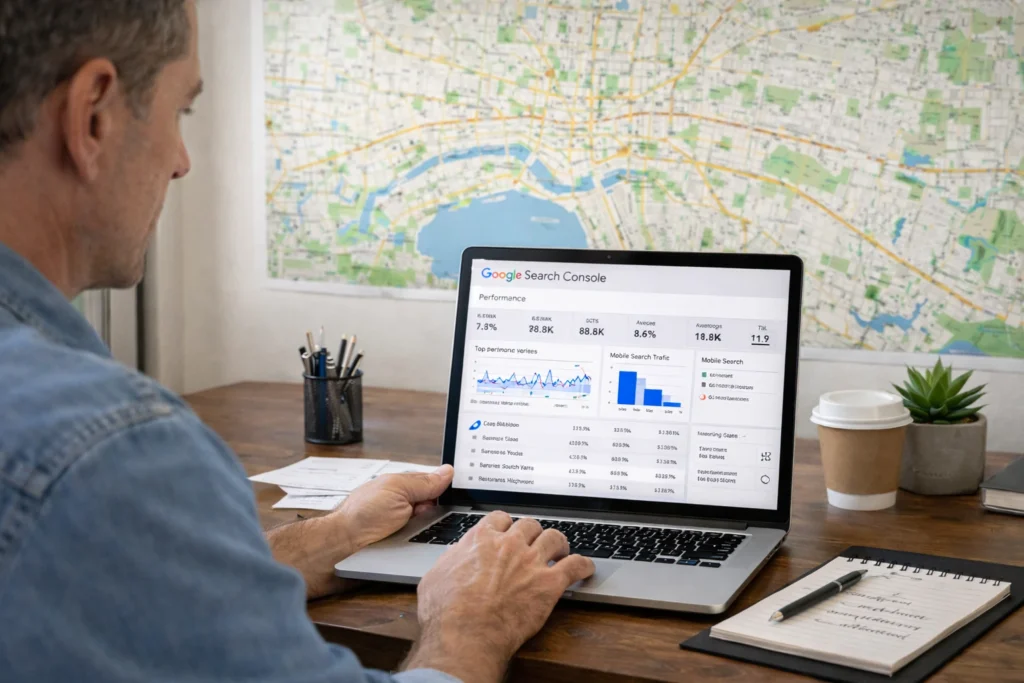
Google Search Console shows which local keywords bring mobile search traffic to your suburb or city-specific pages. It points out technical errors preventing Google from indexing your location content properly. You can also see click-through rates from search results to test better title tags and meta descriptions for each page.
Review Tracking Platforms
If you want to stay on top of customer feedback, platforms like ReviewTrackers or Podium monitor new reviews across multiple sites so you can respond quickly. They alert you when negative reviews pop up that could hurt your local search rankings. Plus, these tools track how fast you’re getting reviews compared to competitors who rank higher in your area.
Ranking High Locally: What Changes for Your Business?
Ranking high in local search makes you visible to customers who are ready to act. That leads to more phone calls, more walk-ins, and enquiries from people who are prepared to buy.
For example, when someone in South Bank searches for a plumber and sees your business first, they’re likely to call within minutes. These aren’t people browsing options or comparing prices for later. They need help now.
Top positions also build trust. Customers tend to trust businesses that appear first in organic results, which helps you attract the right leads without relying on paid ads for exposure.
SEO Strategies That Keep Local Businesses Ahead
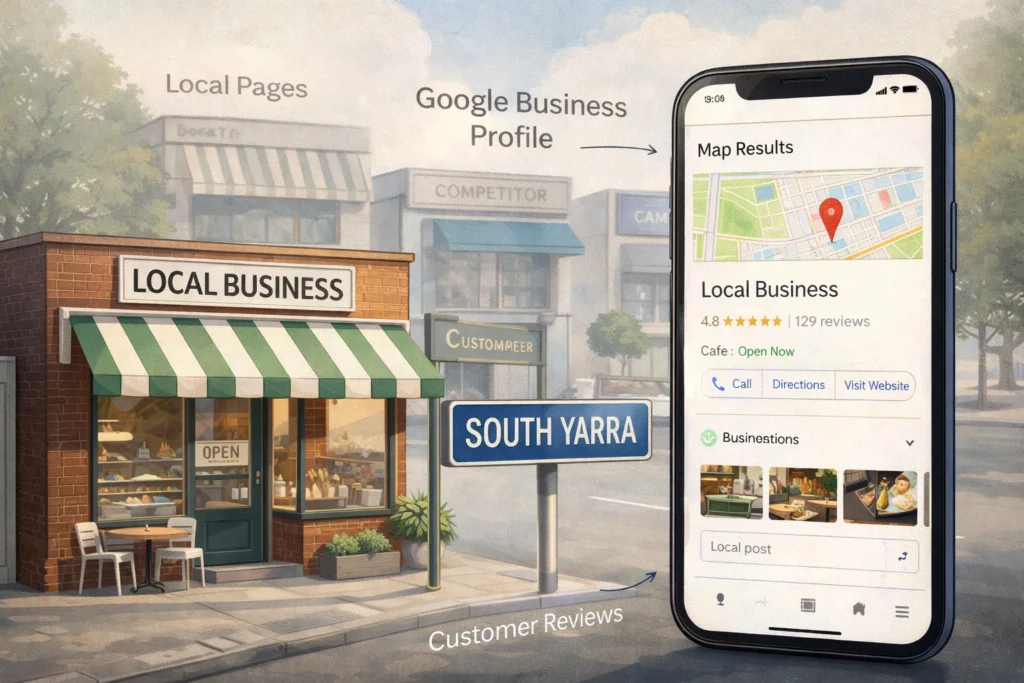
Staying visible in local search results isn’t about one-time fixes but habits that keep you ahead of competitors. Here’s what actually works for local businesses over time.
- Proactive Local SEO Maintenance: Stop ranking drops before they happen, not after you’ve already lost traffic. Quick check-ins help you spot issues before they impact visibility.
- Regular Profile Updates And Fresh Content: Want to show Google you’re still active? Updating your profile and adding fresh content signals that your business is worth showing. A smart content strategy that includes posting updates, offers, and photos helps you stay consistent without burning hours each week.
- Target Suburb-Specific Keywords: Bigger competitors often overlook local traffic. Targeting specific suburbs instead of broad city names makes a real difference. A café in Newtown will get better results optimising for “Newtown breakfast” than generic “Sydney café” searches.
- Citation Audits Across Local Directories: Inconsistent data can split rankings and reduce authority. Regular audits ensure your business information is accurate across all local directories.
Once your foundation is solid, these habits compound over time. You stay visible while competitors scramble to recover lost rankings.
Get Your Local SEO Right From Day One
Fixing setup mistakes early saves you months of poor local search performance and wasted marketing dollars. Most campaigns fail because businesses skip the foundation and jump straight to tactics that can’t work without proper setup.
Starting with the right approach means your local SEO efforts build on each other instead of fighting errors. When your foundation is solid, rankings become easier to earn, and enquiries become more consistent.
If you’re ready to stop guessing and start seeing results from local search, get in touch with us today. We’ll help you build a local SEO strategy that works for your business.